

Malang Teachers Trained to Make Students “Hooked” on English Reading
KEPANJEN – How do you turn students who once dreaded reading English into ones who actually enjoy it? The answer, it turns out, isn’t simply piling on more exercises. English teachers at junior high schools across Malang Regency have now been equipped with extensive reading strategies designed to make reading lighter, more enjoyable, and, if it works, genuinely addictive.
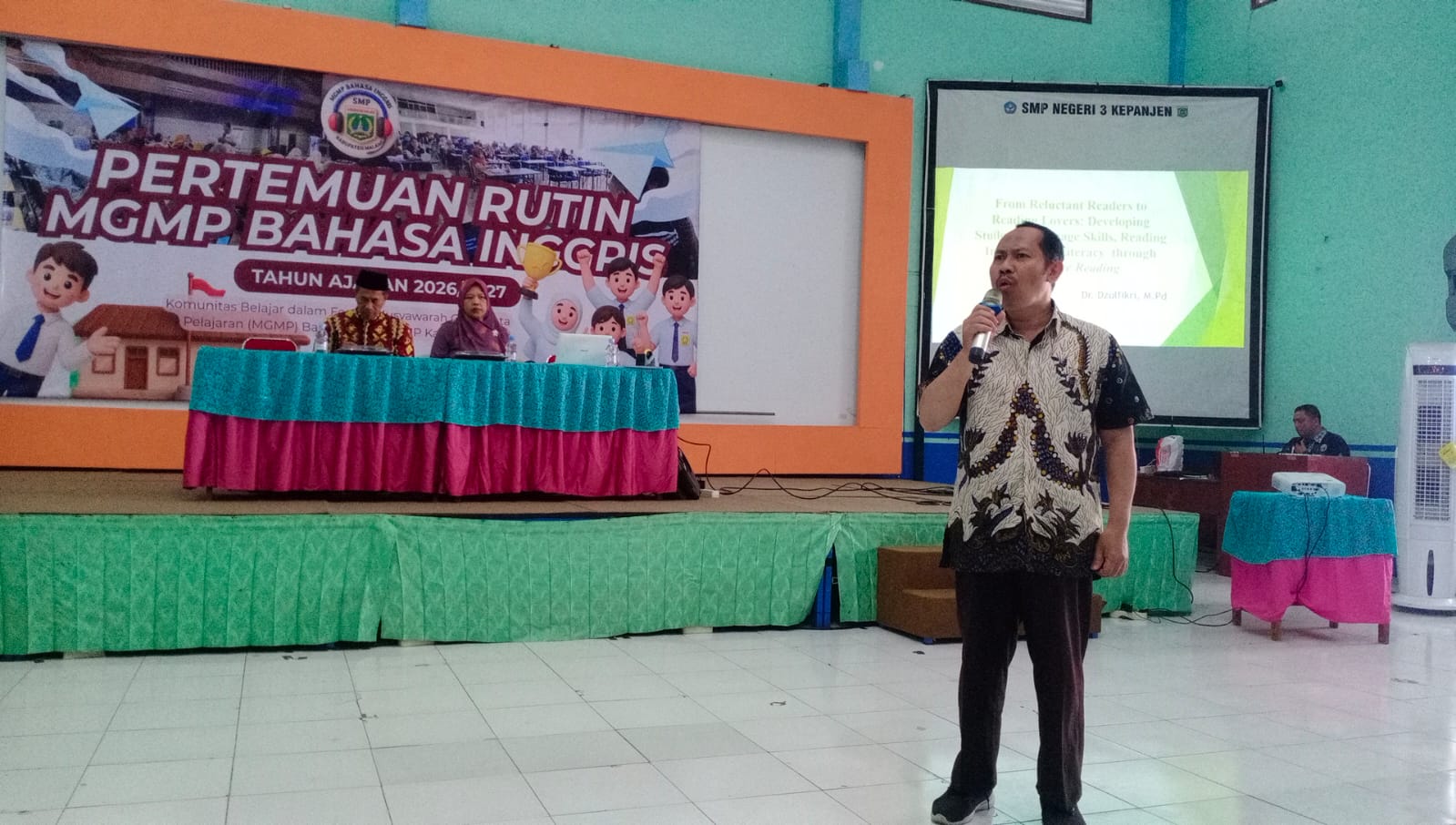
That effort took shape through a Teacher Competency Improvement Workshop themed “Extensive Reading Strategies to Cultivate English Reading Interest Among Junior High Students,” organized by Universitas Islam Malang’s (Unisma) Master’s in English Language Education (MPBING) program in partnership with Malang Regency’s Junior High School English Teachers’ Working Group (MGMP).
Held Saturday, August 29, 2026, at SMP Negeri 3 Kepanjen, Malang Regency, the workshop drew active participation from local English teachers through presentations, discussions, shared experiences, and hands on exploration of strategies they could apply directly in their classrooms.
Three MPBING Unisma academics led the session: Dr. Alfan Zuhairi, M.Pd, Head of Master’s in English Language Education; Prof. Dr. Dwi Fita Heriyawati, M.Pd; and Dr. Dzul Fikri, S.S., M.Pd.
All three offered both academic grounding and practical approaches to building English reading habits among junior high students. Teachers weren’t just introduced to the concept of extensive reading, they were pushed to rethink how reading activities have traditionally been assigned to students.
Reading Doesn’t Have to Be Intimidating
One recurring challenge in English language teaching is the assumption that reading English texts is inherently difficult. Overly complex passages, pressure to understand every vocabulary word, and reading activities always followed by quizzes and tests can quickly drain students’ interest.
Through extensive reading strategies, teachers were encouraged to flip that paradigm entirely.
Students are given the chance to read more material that’s relatively easy, engaging, and matched to their actual skill level. They’re also encouraged to choose readings based on personal interest, so the activity stops feeling like just another school assignment.
“Students don’t need to jump straight into difficult texts to become strong English readers. What matters most is that they get an enjoyable reading experience, done consistently,” was one of the workshop’s central messages.
This approach repositions teachers not merely as assigners of reading tasks, but as facilitators who help students find the right material while building an environment that genuinely nurtures reading habits.
Teachers as Drivers of a Literacy Culture
Dr. Alfan Zuhairi, M.Pd, Head of MPBING Unisma, stressed that improving English learning quality depends heavily on teachers’ competence and creativity in designing learning experiences.
Teachers, he noted, hold a strategic position in building a school’s literacy culture. When teachers can deliver reading activities that are relevant, engaging, and tailored to students’ characteristics, the odds of sparking genuine reading interest rise significantly.
Prof. Dr. Dwi Fita Heriyawati, M.Pd, reinforced the importance of considering students’ needs and characteristics in reading instruction. Students need access to reading material that not only matches their language ability but also sparks genuine curiosity.
Dr. Dzul Fikri, S.S., M.Pd, meanwhile equipped participants with practical perspectives on implementing reading strategies in the classroom, encouraging teachers to design activities that avoid monotony, so students walk away with positive experiences engaging with English texts.
Campus and Teacher Collaboration
Angga Agus Kariyawan, S.Pd., Gr., Chairman of Malang Regency’s Junior High School English Teachers’ Working Group, welcomed the workshop warmly, noting that collaboration between universities and teacher working groups delivers significant benefit for professional development.
Teachers, he added, need space to keep learning, discussing, and gaining fresh insight that addresses real classroom challenges. “Collaboration like this matters because teachers need renewal, new perspectives, and strategies they can apply immediately in their schools. We hope this doesn’t stop at a single workshop, but continues through practice and shared experience among teachers,” he said.
The session unfolded in an interactive atmosphere. Teachers weren’t passive participants, they actively shared their own experiences and challenges in teaching English reading skills.
That discussion made one thing clear: students’ lack of reading interest can’t be solved simply by asking them to read more. It requires the right strategy, engaging material, teacher guidance, and a learning atmosphere where students genuinely feel comfortable.
From Workshop to Literacy Movement
For MPBING Unisma, this workshop was never just a training agenda. It forms part of implementing the Tri Dharma of Higher Education, particularly community service, while standing as a concrete example of how universities can contribute to improving regional education quality.
Its synergy with Malang Regency’s Junior High School English Teachers’ Working Group also bridges academic scholarship with real classroom practice, translating university knowledge and research into learning strategies that genuinely fit teachers’ and students’ needs.
Through this initiative, MPBING Unisma and Malang Regency’s teacher working group hope extensive reading strategies will take root sustainably across local schools, ensuring the workshop’s benefits extend well beyond the event itself and into classrooms, delivering direct impact on students.
Ultimately, building genuine interest in English reading demands a consistent process: the right material, creative teachers, and a supportive learning environment.
From SMP Negeri 3 Kepanjen, that movement echoes forward: teachers growing more skilled, lessons growing more creative, and students growing bolder about opening an English book.
Because the real goal was never just getting students to answer reading comprehension questions correctly. Beyond that, the hope is for students to discover that reading English can actually be enjoyable, even addictive.


